As anticipation builds for Devil Wears Prada 2, couture’s real-world influence is once again in focus
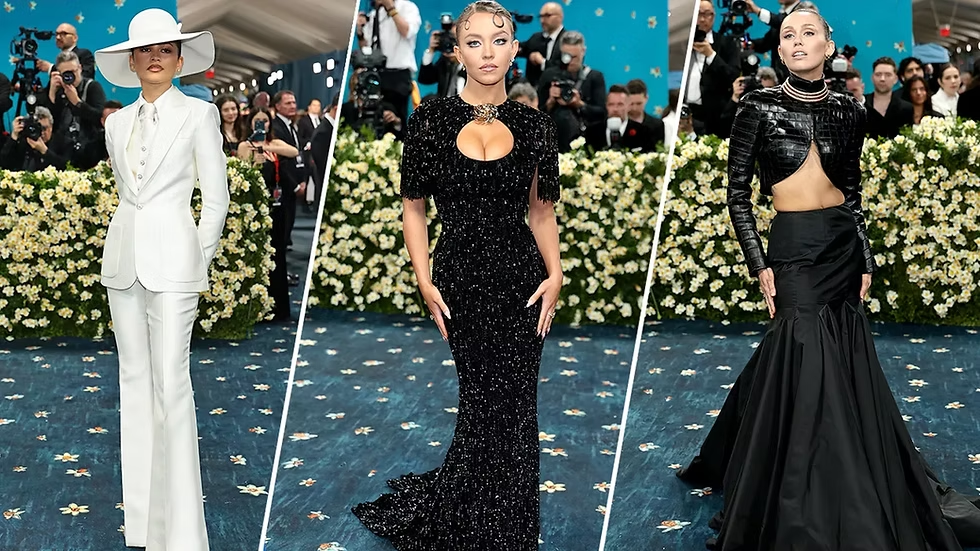
The Met Gala just announced its theme, “Sleeping Beauties: Reawakening Fashion” and the internet is already spinning: who will revive an old look, who will miss the brief, and who’ll show up like a garden exhibit.
But beneath the memes, there’s a quieter question for the average person: why does this matter? Most of us aren’t attending, aren’t invited, and definitely are not buying haute couture.
How does a party on a New York staircase concern the rest of us?

Here’s why: because like it or not, this one night decides what the world will look like next.
The Met Gala theme doesn’t stay on that staircase. It kickstarts trends that seep through in every industry. Clothes, shoes, interiors, art. That one night sets the tone for the design vocabulary used by the world for the rest of the year.
To understand this, you must understand couture. It’s easy to dismiss haute couture as a glittery museum: painfully expensive, wildly impractical, and relevant only to a tiny circle of clients. But couture is not just a luxury market. Couture is a laboratory, where imagination runs wild, where craft outranks clout, and where skill has the final word.

This distinction is crucial today.
Fashion’s hierarchy has drastically flattened. Models were once polished socialites groomed for elite circles, but now is anyone with a tripod and an iPhone. Social media opened fashion up to everyone, but also blurred casual content with true craftsmanship. Couture is one of the few places where skill still rules. You cannot recreate an atelier’s technique in a 30-second reel. Studios like Rumi India have developed faster processing times, but at it’s core, couture is deliberate, patient work.
Miranda Priestley’s infamous monologue in movie “The Devil Wears Prada” says it best. That sweater wasn’t just a colour choice. It was the end of a long chain that started in a couture studio. A creative director selects a shade. Editorial shoots pick it up. Ready-to-wear follows. Mass retail copies. You think you chose it “because you liked it,” but really it was chosen for you.

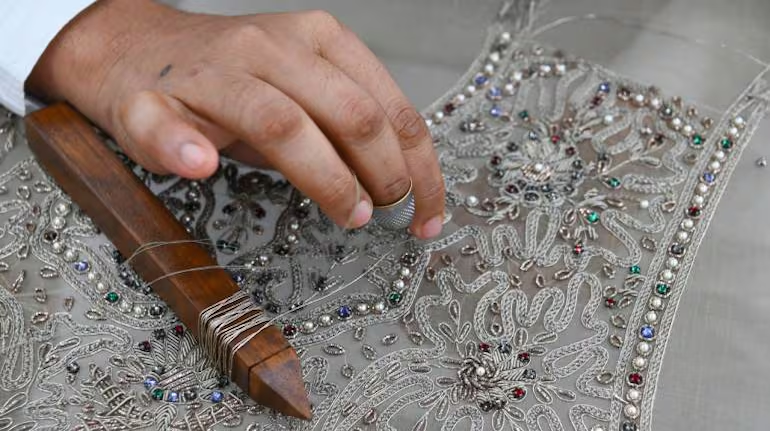
Hand embroidery embodies this chain perfectly.
Couture ateliers experiment first — new stitches, new materials, new ways to shape texture on fabric. Bridal designers ideate with them. Tailors edit and adapt. Mass brands simplify. Even home décor echoes it. Most people only see the final, watered-down version, not the original artistry that created it.
Hand artistry of this kind coming back. A global shift in taste moving away from fast, throwaway things, toward products with meaning, history, and intention. We want to feel connected to things that are painstaking, intentional, and rare. So even if we can’t buy couture, we still crave the feeling of something that took skill and time to create.
So yes, the Met Gala theme concerns you.
Not because you care about who walks a red staircase on the first Monday of May, but because that theme tells us what couture will explore next — and what the world will quietly imitate afterward.